
Annuals, Tropicals > Nicotiana > Nicotiana tabacum > Nicotiana tabacum
Nicotiana tabacum
Common tobacco plant, Queen Mother herb, Virginian tobacco plant
Origin: North-Eastern Argentina, Bolivia, grown since pre-Columbian times. Genus is named for Jean Nicot (1530-1600) who introduced Nicotiana to France.
| Family |
| Solanaceae |
| Genus |
| Nicotiana |
| Species |
| tabacum |
| Category |
| Annuals, Tropicals |
| USDA Hardiness Zone |
| 8 |
| Canadian Hardiness Zone |
| 7b - 8a |
| RHS Hardiness Zone |
| H5 - H4 |
| Temperature (°C) |
| -12 - (-7) |
| Temperature (°F) |
| 10 - 20 |
| Height |
| 120 cm |
Photographs
Cultivars
click to expand
Description and Growing Information
Flowering Period










| Landscape |
| Grown in cultivation on a domestic scale, but can be difficult to cure in cool climates. |
| Cultivation |
| Grow in a rich, moisture retentive but well-drained soil in full sun, using a stake in exposed areas. |
| Pests |
| Aphids can be a problem for young plants, and mosaic and mottling viruses should be watched for. |
| Bark/Stem Description |
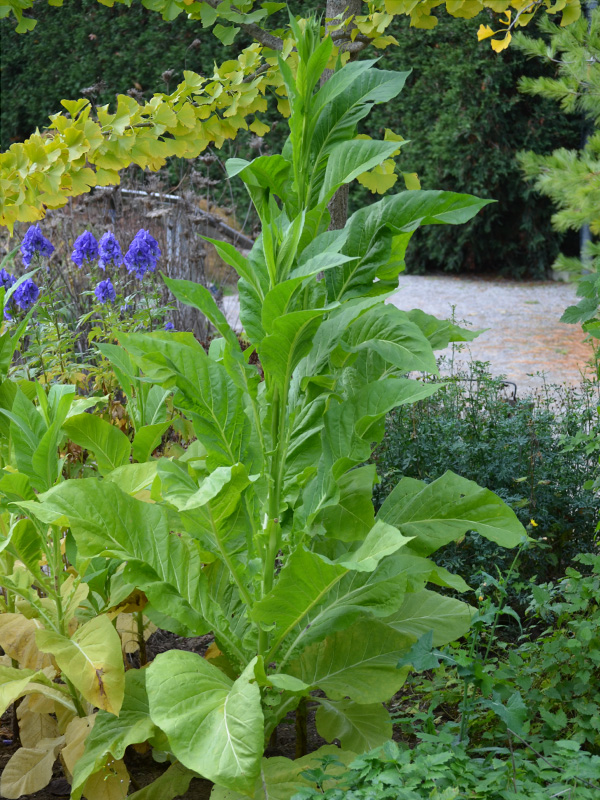
| Stems often become woody at the base. |
| Leaf Description |
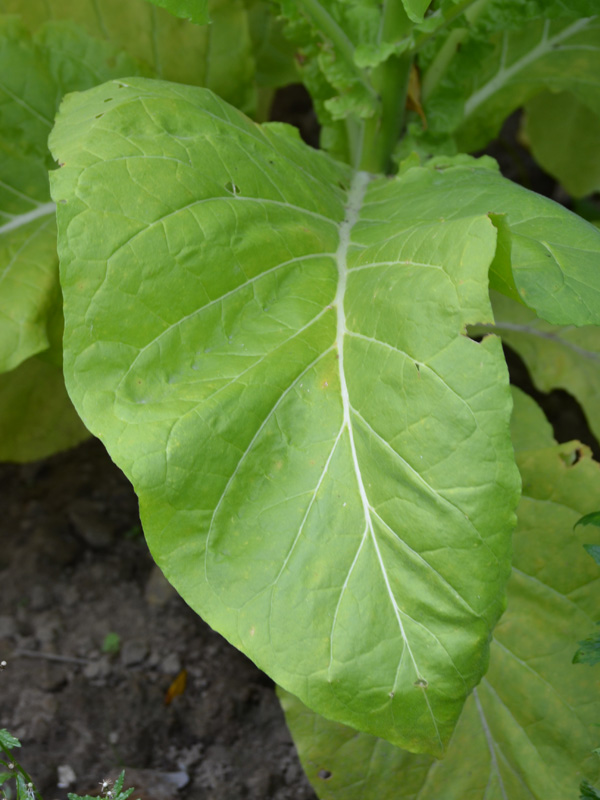
| Leaves are ovate to elliptic to lanceolate, growing up to 25 cm. |
| Flower Description |
| Flowers are green-white to rose. |
| Fruit Description |
| Fruit is elliptic to globose, growing to 2 cm. |
| Notable Specimens |
| Royal Botanical Gardens, Burlington, Ontario, Canada. |
| Propagation |
| Surface sow the seed in spring about ten weeks before setting out. |
| Ethnobotanical Uses (Disclaimer) |
| Various forms of the N. tabacum are used for different purposes, including Havana tobacco for cigars and Virginia tobacco for cigarettes. Poisonous if ingested. |

top