
Tropicals > Cereus > Cereus
Cereus
Daisy Anemone
Origin: South America.
| Family |
| Cactaceae |
| Genus |
| Cereus |
| Category |
| Tropicals |
| USDA Hardiness Zone |
| 9 - 11 |
| Canadian Hardiness Zone |
| Requires cool season protection under glass. |
| RHS Hardiness Zone |
| H3 - H1b |
| Temperature (°C) |
| 0 |
| Temperature (°F) |
| 5 |
| Height |
| 4 m |
| Spread |
| 0.2 - 0.4 m |
Photographs
Cultivars
click to expand
Description and Growing Information
Flowering Period









| Landscape |
| Borders, potted outdoor patio plant, potted indoor plant, rock gardens or as a specimen. |
| Cultivation |
| Plant in well-draining, loose gravelly, loamy or sandy soil in full sunlight. Repot annually to encourage growth and health. |
| Shape |
| Upright columnar. |
| Growth |
| Slow |
| Pests |
| Scale and mealybugs may be a problem. |
| Habitat |
| Dry rocky slopes and plains. |
| Bark/Stem Description |
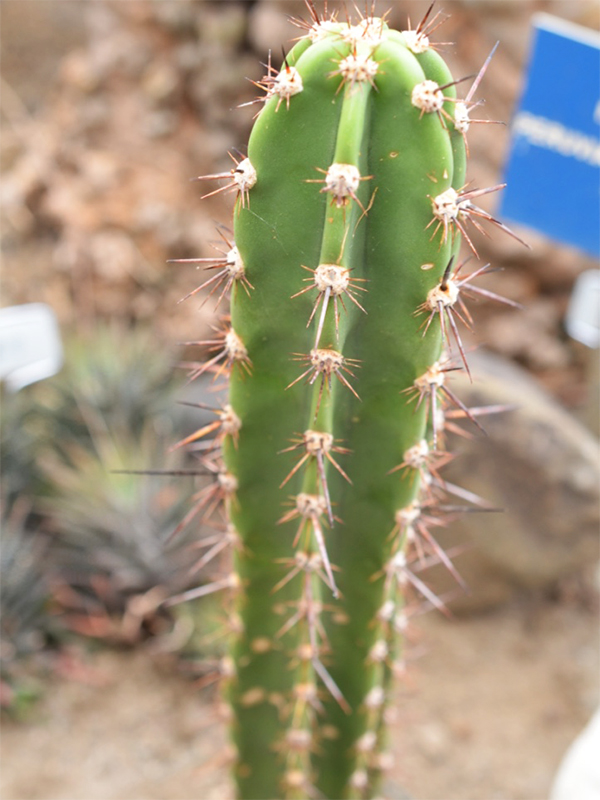
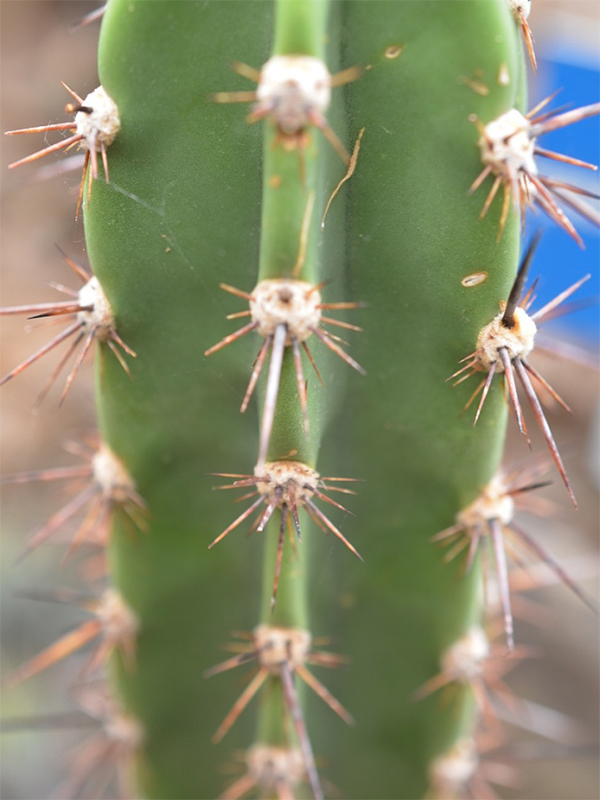
| Smooth succulent bark with pronounced venations that carry short spines in panicles of 2 - 6. |
| Flower Description |
| Open cone-shaped blooms that grow lengthwise along veins with delicate lanceolate petals. |
| Colour Description |
| Medium green succulent bark, greyish-white to grey spines. White-petaled flowers with purplish-brown outside petals and yellow pistils. |
| Texture Description |
| Smooth, spiny. |
| Notable Specimens |
| Centennial Conservatory, Thunder Bay, Ontario, Canada. |

top