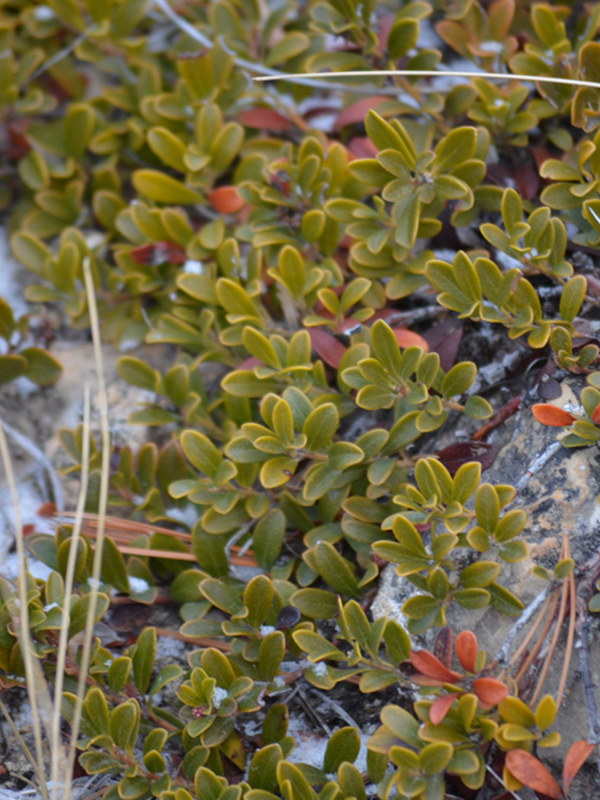
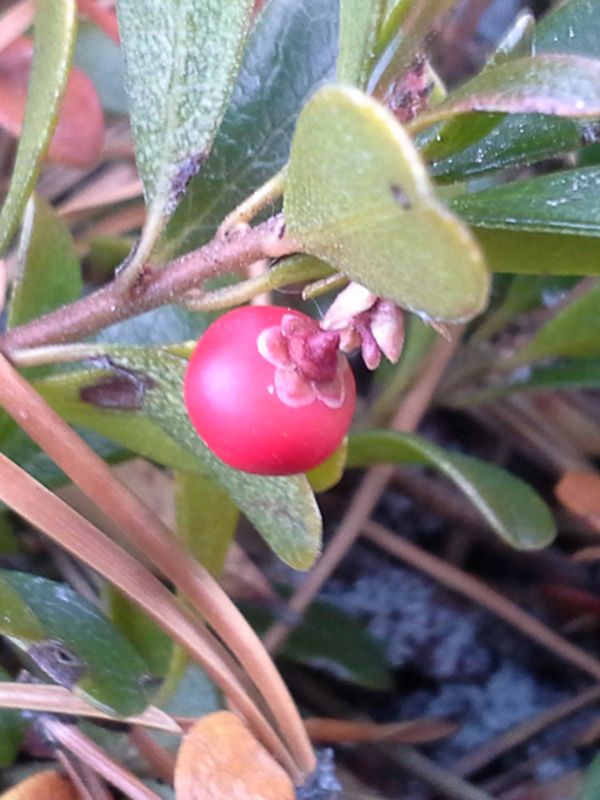
Arctostaphylos uva-ursi (Common Bearberry, Kinninnick, Mealberry, Hog Cranberry, Sandberry, Mountain Box, Bear's Grape, Creashak)
Botanical Information
| Family | Ericaceae |
| Genus | Arctostaphylos |
| Species | uva-ursi |
| Category | Woody |
| Origin | North America, North Eurasia |
| Ethnobotanical Uses Disclaimer | Tea can be made from the leaves, stems or roots and have some medicinal properties (antiseptic, astringent and diuretic). Fruit is edible for humans, but generally flavourless and mealy. |
| Pronunciation |
Details
| USDA Hardiness Zone | 4 |
| USDA Hardiness Ref. | |
| Canadian Hardiness Zone | 2 - 5a |
| Canada Hardiness Ref. | |
| RHS Hardiness Zone | H7 |
| RHS Hardiness Ref. | |
| Temperature (°C) | -35 - (-29) |
| Temperature (°F) | -30 - (-20) |
| Height | 16 - 32 cm |
| Spread | 1 m |
| Growth | Slow |
| Flowering Period | April |
Description and Growing Information
| General Description | Makes an excellent ground cover and is native to Canada. Does especially well on light soils and should only be used in dry locations. |
| ID Characteristic | A creeping alpine with small white, pink-tinged flowers with red fruit. |
| Shape | Low, spreading. |
| Landscape | Large scale ground cover, used to prevent soil erosion on slopes and hillsides. |
| Propagation | Seeds have impermeable seed coats and dormant embryos; acid scarification for 3-6 hours followed by 2-3 months of warm and 2-3 months of cold stratification resulted in 30-60% germination according to Michael Dirr. |
| Cultivation | Grow in full sun or light shade in well-draining but moist soil that is lime-free. |
| Pests | Black mildew, leaf galls and rust. |
| Habitat | Cicumboreal covering Europe, Asia, North America, south to Virginia and Northern California. Covers alpine moors and heaths, on the scree and boulder, often on thin layers of peaty detritus. |
| Bark/Stem Description | Reddish-brown branchlets, with papery peeling bark on older twigs. |
| Flower/Leaf Bud Description | Solitary, sessile, ovoid with 3 exposed scales. |
| Leaf Description | Leaves are alternate, simple, obovate or obovate-oblong and 5mm to 3 cm long. Lustrous dark green above and lighter underneath. |
| Flower Description | Small white tinged pink urn-shaped flowers. Borne in nodding racemes; dainty and beautiful. |
| Fruit Description | Fleshy drupe with a lustrous bright red colour. |
| Colour Description | Leaves are a glossy bright green to dark green in the summer and changing to a bronze - reddish colour in autumn and winter. Foliage effect is unique and quite different from most ground covers. |
| Texture Description | Fine. |
Photographs
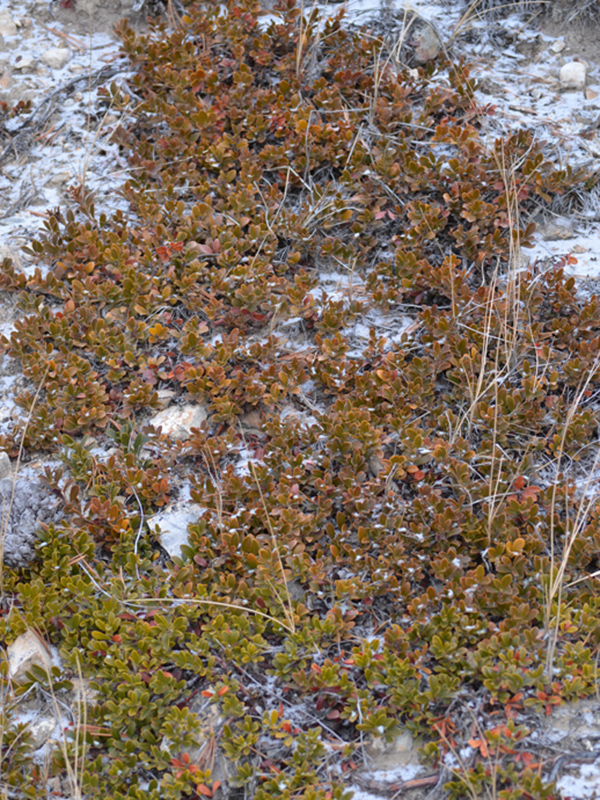
Often it grows as a sparse, procumbent form.
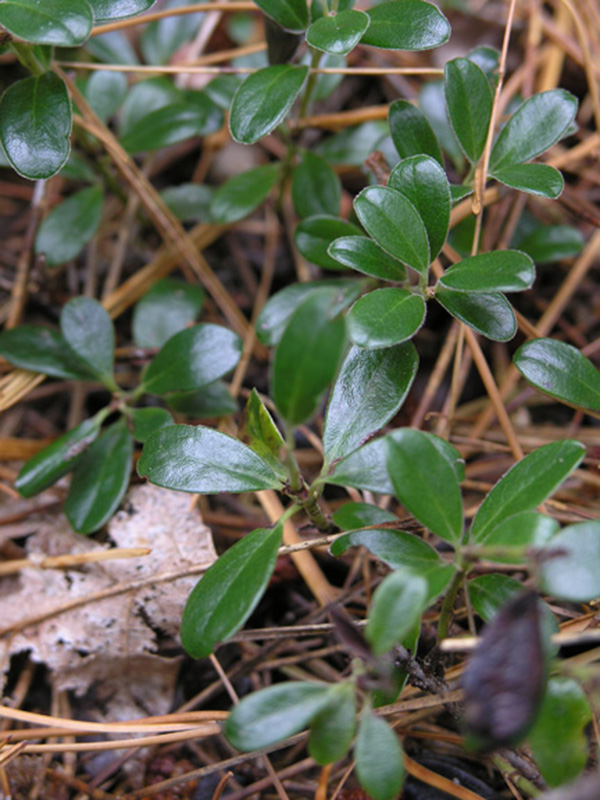
Glossy, shiny leaves are characterisitic of Bearberry.